The Exceptional Quality of Iranian Geotextile Layers
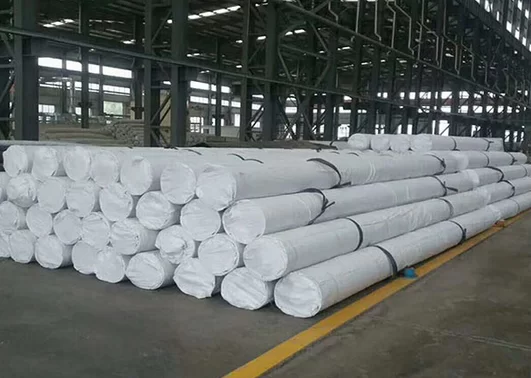
-The Exceptional Quality of Iranian Geotextile Layers
-Table of Contents(Iranian Geotextile Layers)
1.Introduction.
2.Overview of Modern Geotextile Performance Requirements.
3.Key Technical Advantages of Iranian Geotextile Layers.
3.1 High Mechanical Strength.
3.2 Excellent Permeability and Filtration Stability.
3.3 Superior UV and Chemical Resistance.
3.4 Consistent Manufacturing Standards.
3.5 Competitive Quality-to-Cost Ratio.
4.Why Global Markets Trust Iranian Geotextiles.
4.1 Compliance with International Standards.
4.2 Proven Performance in Diverse Climate Zones.
4.3 Strong Export Logistics and Production Capacity.
5.Strategic Applications of Iranian Geotextiles in Export Markets.
6.Challenges and Future Growth Opportunities.
7.Conclusion.
1. Introduction(Iranian Geotextile Layers)
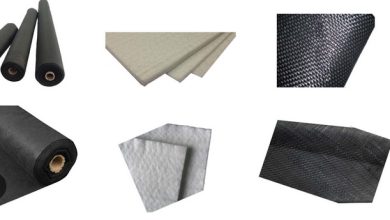
Over the past two decades, Iran has emerged as one of the most reliable producers of high-quality geosynthetic materials, especially non-woven and woven geotextile layers.
These products have gained significant attention in the Middle East, Central Asia, Africa, and even parts of Europe due to their technical reliability.
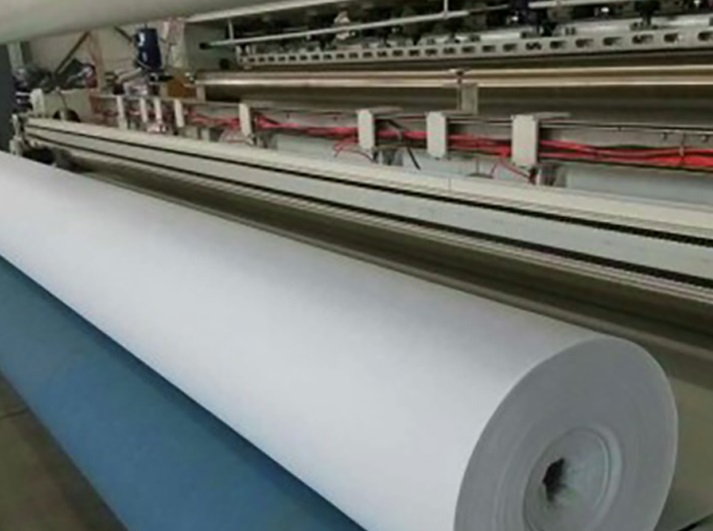
competitive pricing, advanced polymer technology, and consistent manufacturing standards. Iranian geotextile manufacturers have invested heavily in modern equipment such as needle-punch lines, thermal bonding systems. melt-spun fiber production, and multi-stage quality control processes, which have elevated product quality to a level suitable for global export.(Iranian Geotextile Layers).
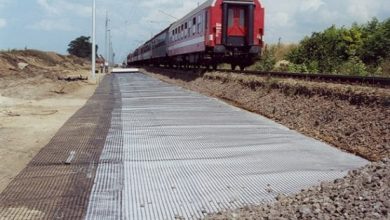
Today, Iranian geotextiles are widely used in road construction, railway stabilization, drainage systems, landfills, reservoirs, coastal protection, and agricultural engineering. The increasing demand in international markets reflects a strong recognition of their durability and performance.
2. Overview of Modern Geotextile Performance Requirements
To succeed in the global construction and infrastructure market, a geotextile must demonstrate several core characteristics:
-High tensile strength and puncture resistance.(Iranian Geotextile Layers)
-Adequate thickness and mass per unit area (GSM).
-Controlled permeability and optimum pore size distribution.
-Resistance to UV radiation, temperature variations, chemicals, and biological degradation.
-Stable long-term performance under loads and environmental stresses.
-Compliance with ASTM, ISO, and EN geosynthetics standards.
Iranian geotextile products have proven capable of meeting or exceeding these requirements. making them attractive options for countries seeking cost effective yet reliable engineering solutions.
3. Key Technical Advantages of Iranian Geotextile Layers
3.1 High Mechanical Strength(Iranian Geotextile Layers)
Iranian geotextiles are produced using high-quality polypropylene (PP) and polyester (PET) fibers. Advanced needle-punching techniques significantly enhance tensile strength, tear resistance. and elongation properties.
This allows the material to perform effectively in applications such as:
-Road base stabilization.
-Railway ballast separation.
-Reinforcement of embankments and retaining structures.
The consistency in fiber distribution results in homogeneous mechanical performance, which is a key expectation for export markets.
3.2 Excellent Permeability and Filtration Stability(Iranian Geotextile Layers)
Achieving the right balance between filtration and separation is critical. Iranian geotextiles offer:
-Controlled pore size.
-Uniform permeability.
-Long-term clogging resistance.(Iranian Geotextile Layers)
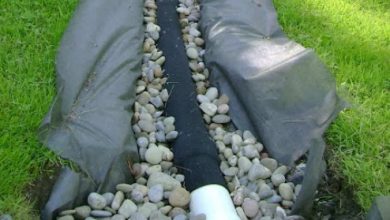
-These properties ensure reliable drainage and soil retention, which is essential for landfills, drainage trenches, dam filters, and retaining walls.
The durability of filtration performance makes Iranian geotextiles competitive internationally.
3.3 Superior UV and Chemical Resistance(Iranian Geotextile Layers)
Due to Iran’s exposure to strong sunlight and diverse climatic conditions, manufacturers incorporate UV stabilizers, antioxidants, and anti-aging additives.
As a result, exported Iranian geotextiles perform well in:
-High-UV regions in the Middle East and Africa.
-Saline or chemically active soils.
-Irrigation systems and wastewater environments.
This chemical and environmental resistance is a major advantage over some lower-quality Asian alternatives.
3.4 Consistent Manufacturing Standards(Iranian Geotextile Layers)
Most producers follow:
-ISO 9001 quality management systems.
-ISO 10320, ISO 9073, and ASTM D4595 testing standards.
-Full in-house laboratory testing (tensile, CBR puncture, permeability, GSM, thickness, and UV aging).
This ensures reliable, export-ready production with traceable batch documentation, which is essential for international engineering and procurement processes.
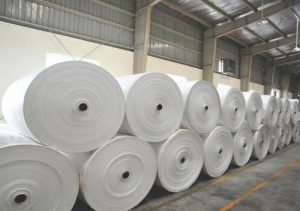
3.5 Competitive Quality-to-Cost Ratio(Iranian Geotextile Layers)
One of the strongest selling points is the balance between high technical quality and attractive pricing. Iran’s local polymer production, energy cost advantages, and efficient manufacturing lines allow producers to offer competitive export prices without compromising performance.
For many countries, especially in developing regions, Iranian geotextiles provide an economical alternative to European products while maintaining similar functionality.
3.5.1Quality-to-Cost Ratio Summary Table
| Product / Model | Key Features | Key Metrics |
|---|---|---|
| Void Ratio: 95%, Load: 702 kN/m², Unit Weight: 12.7 kg | Modular storage, recycled PP, inspectable design | AquaCell Core-R |
| Load: 110 t/m² (~1078 kN/m²), Weight: ~2.2 kg/m² | High-strength PP, lightweight, used for landscaping | DrainEdge Drain Cell |
| Void Ratio: 91%, Drain Capacity: 4 L/s/m², Load: 95 t/m² (~932 kN/m²) | HDPE grid, 100% recycled material, high drainage capacity | Geoplast GEOCELL |
| Versatile, high crush strength, cost-saving compared to competitors | Australian-engineered, easy installation, suitable for heavy traffic | iglube Drainage Cell |
| Load: 562 kN/m², Void Ratio: 95%, Unit Weight: 15.5 kg, Storage: 237.5 L | 100% recycled plastic, easy to handle, multiple applications | StormCrate55 |
| Load: 500-800 kg/m² (Base-Pro), Drainage: 1.2-1.56 L/s/m² | Multiple models (Base, Advanced, Pro) with varying specs | HDPE Modular Drainage Cells |
4. Why Global Markets Trust Iranian Geotextiles
4.1 Compliance with International Standards
Geotextiles intended for export undergo third-party conformity assessments and are tested in accordance with:(Iranian Geotextile Layers)
-ASTM D4833, D5261, D4491.
EN ISO 10319 and EN ISO 12236.
This compliance strengthens trust among foreign contractors and government clients.
4.2 Proven Performance in Diverse Climate Zones
Exported geotextiles have been successfully used in:
-Desert climates.
-Humid tropical regions.
-Cold mountainous areas.
-Coastal and marine environments.
Their wide climatic compatibility makes them ideal for global supply chains.
4.3 Strong Export Logistics and Production Capacity
Iran’s manufacturing sector has expanded significantly, enabling:
-High volume production.
-Custom GSM ranges (100–1200 g/m²).
-Wide-roll formats up to 6 meters.(Iranian Geotextile Layers)
-Rapid shipping via road, sea, and rail corridors.
This readiness supports large-scale international infrastructure projects.
4.3.1Strong Export Logistics and Production Capacity Summary Table
| Company / Model | Key Export Logistics Features | Certifications & Standards |
|---|---|---|
| ISO 9001, ISO 14001, ISO 45001 | Strategic UAE base for regional (UAE, Saudi, Qatar, Kuwait) and international (Europe, Africa, Asia) exports; logistics enhancements for global supply chains | Miellat Industries |
| Not specified in search results | Qingdao production base; export via Hong Kong; regular shipping from Qingdao and Tianjin ports; in-house documentation and logistics | EcoGeoX Limited |
| ISO9001:2015 | Located in Jinan, near Qingdao Port; 15-day lead time; FOB, CIF, CFR shipping terms | Shandong EarthShield |
| ISO9001:2015 | 15 working days lead time; located in Shandong province | Dajin Factory |
5. Strategic Applications in Export Markets
This product are commonly exported for use in:
-Road and highway construction.
-Railways and industrial yards.
-Geomembrane protection for ponds and landfills.
-Drainage channels and soil filtration.
-Erosion control and coastal works.
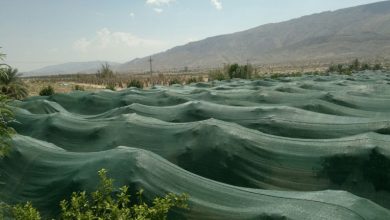
-Agriculture, greenhouse systems, and water management.(The variety of applications highlights their versatility and reliability).
6. Challenges and Future Growth Opportunities
Although Iranian geotextiles enjoy strong regional demand, global expansion requires:
-Enhanced branding and certification.
-Stronger digital marketing and international presence.
-Continuous R&D for specialty geotextiles (reinforced, composite, high-strength PET fabrics).
With ongoing investment, Iranian manufacturers have the potential to expand into European and North American markets.
7. Conclusion
The exceptional performance of Iranian geotextile layers—characterized by high mechanical strength has made them increasingly attractive in international markets.
Supported by competitive pricing and strong logistical capacity. Iranian geotextiles offer a reliable and efficient solution for global civil engineering and environmental projects.
As export demand continues to rise, Iran’s geosynthetics industry is well-positioned to play a major role in the future of infrastructure development across diverse regions of the world.