why to use geomembranes and geotextiles?

-Introduction
Geomembranes and geotextiles are two of the most widely used geosynthetic materials in modern civil engineering, mining, water management, and environmental protection projects.
Furthermore, their rapid global adoption is due to their exceptional ability to control water, stabilize soil, prevent leakage, reinforce structures, extend service life, and reduce project costs.
In addition, when combined, they form an integrated barrier and filtration system that significantly improves the performance, durability, and safety of infrastructure. Therefore, the following sections outline the core reasons behind their effectiveness, explained in clear engineering terms.
1. Superior Waterproofing & Seepage Control (Geomembranes)
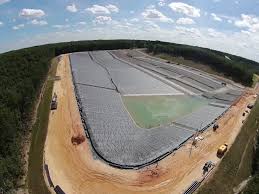
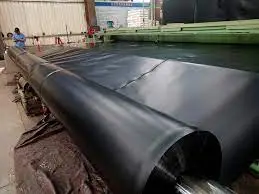
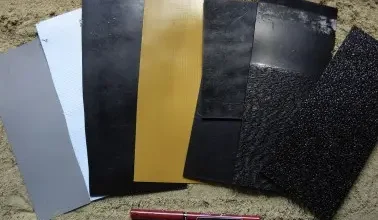
Geomembranes—especially HDPE, LLDPE, PVC, and EPDM—are the most effective synthetic barriers against water, chemicals, and gases. Notably, they deliver unmatched impermeability compared to traditional lining systems.
A — Key Benefits
-Zero-leakage performance: Permeability is nearly zero.
-Ideal for lining: Ponds, reservoirs, tanks, canals, tunnels, and landfills.
-Excellent chemical resistance: Suitable for industrial waste, mining tailings, fertilizers, oils, and hydrocarbons.
-Long lifespan: 30–50+ years with UV and oxidation resistance.
-Cost reduction: Eliminates the need for expensive clay or concrete layers.
B — Applications
-Mining ponds.
-Evaporation ponds.
-Irrigation canals.
-Landfills.
-Aquaculture ponds.
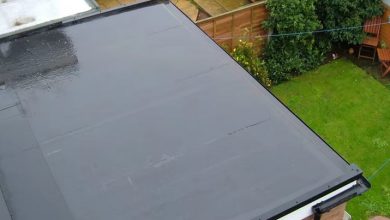
-Roof waterproofing.
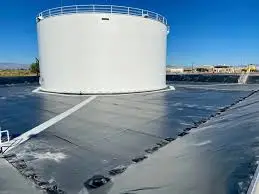
-Wastewater treatment tanks.
2. Soil Stabilization & Structural Reinforcement (Geotextiles)
Geomembranes and geotextiles play a crucial role in soil stabilization and structural reinforcement by improving load distribution, preventing soil movement, and enhancing overall ground integrity.
Specifically, geotextiles provide separation, filtration, and tensile strength, while geomembranes create a moisture barrier that prevents subgrade weakening.
Ultimately, together they form a stable, reinforced foundation that increases bearing capacity, reduces settlement, and extends the service life of roads, embankments, and other infrastructure.

A — Key Benefits
-Prevent mixing of soil layers
-Increase load-bearing capacity of soft or loose soils.
-Provide long-term filtration while retaining soil particles.
-Ensure rapid drainage under roads, railways, and retaining structures
-Reduce settlement and improve structural reliability.
-Lower construction costs by reducing aggregate usage.
B — Applications
-Road construction.
-Railways.
-Embankments.
-Gabions.
-Retaining structures.
-Roof gardens.
-Underdrain systems.
-Slope stabilization.
3. Protection Layer for Geomembranes (Best Combined Use)
A protection layer is essential for safeguarding geomembranes against puncture, abrasion, and mechanical damage during installation and long-term operation.
Typically, geotextiles are used as the protective layer because they provide cushioning, stress distribution, and separation from sharp aggregates or subgrade irregularities.
As a result, this added layer significantly enhances the durability and performance of the geomembrane, ultimately ensuring reliable waterproofing and extended service life.
A — Benefits of Combining Them
Geotextiles act as a cushion to protect geomembranes from:
-Roots.
-Rough concrete surfaces.
-Sharp aggregates.
-Construction equipment.
-Puncture, tearing, or abrasion.
Accordingly, the life of the waterproofing system is dramatically extended.
Moreover, installation quality improves due to smoother and more uniform surfaces.
Additionally, geotextiles allow drainage under or over the geomembrane when required.
B — Essential Applications
-Landfills.
-Reservoirs.
-Fish farms.
-Roofs.
-Tunnels.
-Basements.
4. Environmental Protection & Regulatory Compliance
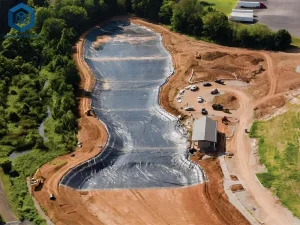
Geomembranes and geotextiles protect soil, groundwater, and ecosystems by preventing contamination. Consequently, they are relied upon in projects where environmental safety is critical.
A-Environmental Advantages
-Contain hazardous waste in mining, industry, and oil & gas.
-Prevent leachate seepage in landfills.
-Block chemical infiltration into soil and aquifers.
-Support water conservation by reducing seepage in reservoirs and canals.
-Reduce erosion and protect coastlines and riverbanks (geotextiles + geobags).
B-Meeting International Standards
-ASTM.
-ISO.
-GRI.
-EN.
-EPA.
-CE.
Therefore, they remain compliant with global environmental and construction regulations.
5. Economic Advantages & Project Cost Reduction
A — Using Geomembranes Saves Money By:
-Eliminating costly clay liners.
-Reducing concrete requirements.
-Lowering water loss (→ reduced pumping, treatment, and energy use).
-Minimizing long-term maintenance and repair costs.
B — Using Geotextiles Saves Money By:
-Reducing aggregate thickness.
-Extending the lifespan of pavements and embankments.
-Decreasing repair frequency.
-Improving construction speed and efficiency.
Together, these materials provide one of the highest returns on investment in geotechnical applications. Consequently, they are a preferred choice for cost-driven infrastructure projects.
6. Long Service Life & Durability
Geomembranes and geotextiles are engineered to offer long service life and exceptional durability, even in harsh environments.
Moreover, their resistance to UV exposure, chemicals, and mechanical stresses ensures decades of dependable performance.
In addition, their stable mechanical properties help maintain structural integrity, preventing degradation and reducing maintenance needs. Ultimately, these characteristics make them highly reliable for long-term infrastructure and environmental protection.
-Advantages
-High endurance under long-term loading.
-Geomembranes can last 50–75 years with proper installation.
-Geotextiles may last over 100 years in buried conditions.
7. Ease of Installation & Global Availability
Geomembranes and geotextiles are widely recognized for their easy and efficient installation, primarily due to their lightweight, flexible rolls and compatibility with various surfaces. Furthermore:
-They allow rapid deployment compared to clay or concrete systems.
-Their lightweight nature enables easy transport and export.
In addition, simple welding (geomembranes) or sewing/anchoring (geotextiles) speeds up installation.
Consequently, labor and machinery requirements are significantly reduced.
Moreover, wide-width rolls minimize joints, ensuring higher performance and faster project completion.
-Conclusion
Geomembranes and geotextiles are essential geosynthetic materials that deliver advanced performance and environmental protection.
Additionally, they offer substantial cost savings across a wide range of civil engineering applications. First, geomembranes provide high-integrity waterproofing, chemical resistance, and long-term containment.
Meanwhile, geotextiles deliver soil stabilization, filtration, drainage, and cushioning.
Accordingly, when combined, they create a robust, engineered barrier system that greatly enhances the safety, durability, and overall efficiency of modern infrastructure.

great